Funeral poems
O Captain! My Captain!
Reading this poem at a funeral?
Create a farewell website for all the funeral details, RSVPs, flowers, donations and tributes in one place.
Free. No card needed.
O Captain! my Captain! our fearful trip is done, The ship has weather’d every rack, the prize we sought is won, The port is near, the bells I hear, the people all exulting, While follow eyes the steady keel, the vessel grim and daring; But O heart! heart! heart! O the bleeding drops of red, Where on the deck my Captain lies, Fallen cold and dead. O Captain! my Captain! rise up and hear the bells; Rise up--for you the flag is flung--for you the bugle trills, For you bouquets and ribbon’d wreaths--for you the shores a-crowding, For you they call, the swaying mass, their eager faces turning; Here Captain! dear father! This arm beneath your head! It is some dream that on the deck, You’ve fallen cold and dead. My Captain does not answer, his lips are pale and still, My father does not feel my arm, he has no pulse nor will, The ship is anchor’d safe and sound, its voyage closed and done, From fearful trip the victor ship comes in with object won; Exult O shores, and ring O bells! But I with mournful tread, Walk the deck my Captain lies, Fallen cold and dead.
First published in 1865
Public domain in the UK and the US
Reading this poem at a funeral?
Create a farewell website for all the funeral details, RSVPs, flowers, donations and tributes in one place.
Free. No card needed.
What it means
The voyage is over, the ship came through everything, and it is pulling into a harbour full of bells and flowers and cheering people. The man who steered it is lying dead on the deck. The speaker keeps telling him to get up and hear it, knowing he will not, and calls him Captain and then calls him father.
Who's it for
a father, or anyone who got a family or a business through something hard and did not live to see the good of it. Right for a service where people want it said out loud that this is not fair.
Where it came from
Whitman wrote it after Abraham Lincoln was assassinated in April 1865 and printed it the same year in the Sequel to Drum-Taps. Lincoln is never named in it. It is a crew member speaking to a dead captain whom he also calls his father, and it is one of the very few things he wrote in rhyme and regular metre.
About Walt Whitman
American · 1819 to 1892
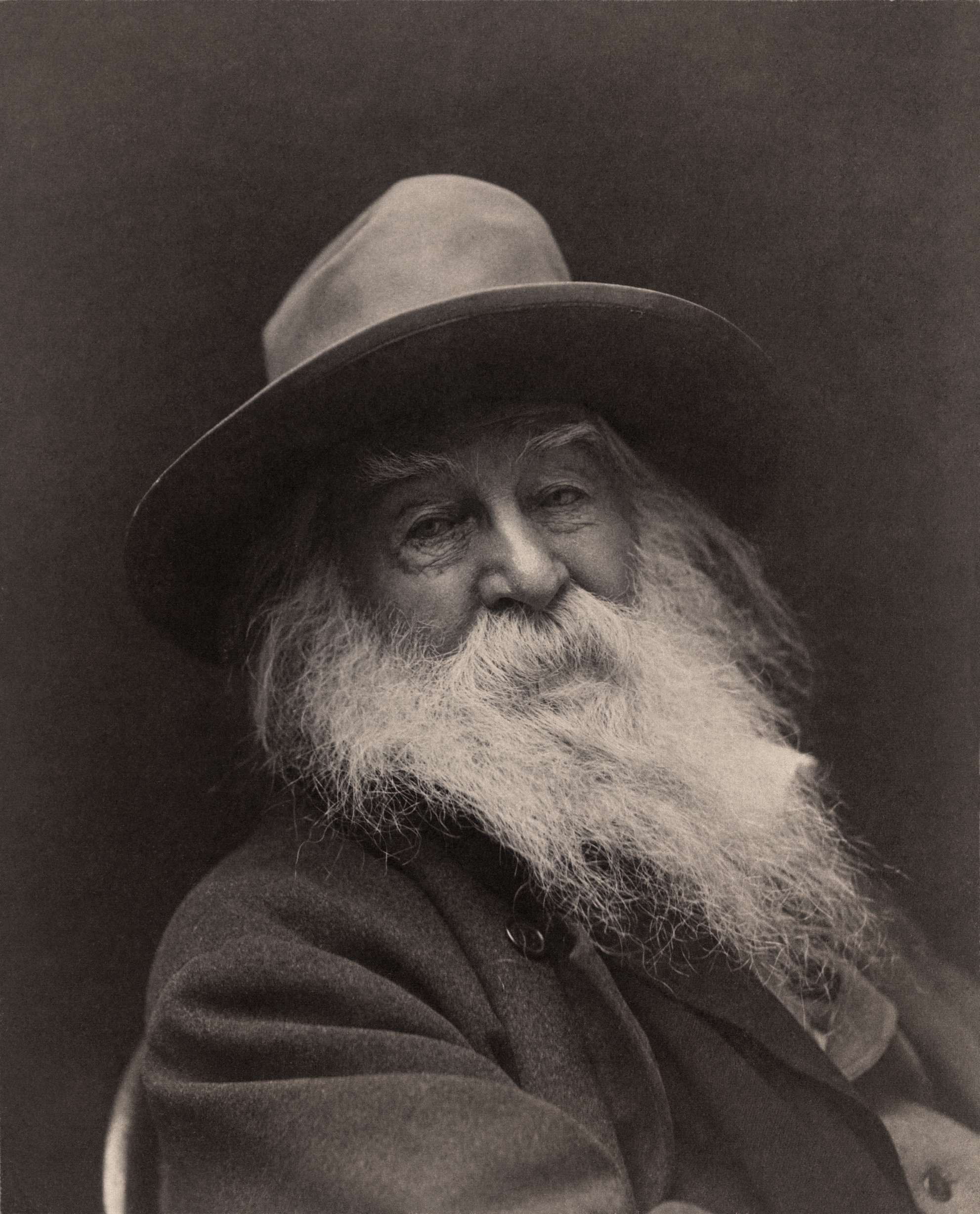
Portrait by George Collins Cox, restoration by Adam Cuerden. Public domain.
Walt Whitman was an American poet from Long Island who left school at eleven and worked as a printer, a schoolteacher and a newspaperman before he published anything. He spent the Civil War nursing wounded soldiers in the army hospitals in Washington. For the rest of his life he rewrote one book, Leaves of Grass, from 1855 until the year he died.
More from Walt Whitman
19 in all
More traditional poems
32 in all
More poems for a father
9 in all
Reading this poem at a funeral?
Create a farewell website for all the funeral details, RSVPs, flowers, donations and tributes in one place.
Free. No card needed.