Funeral poems
The Pallid Wreath
Reading this poem at a funeral?
Create a farewell website for all the funeral details, RSVPs, flowers, donations and tributes in one place.
Free. No card needed.
Somehow I cannot let it go yet, funeral though it is, Let it remain back there on its nail suspended, With pink, blue, yellow, all blanch’d, and the white now gray and ashy, One wither’d rose put years ago for thee, dear friend; But I do not forget thee. Hast thou then faded? Is the odor exhaled? Are the colors, vitalities, dead? No, while memories subtly play--the past vivid as ever; For but last night I woke, and in that spectral ring saw thee, Thy smile, eyes, face, calm, silent, loving as ever: So let the wreath hang still awhile within my eye-reach, It is not yet dead to me, nor even pallid.
First published in 1891
Public domain in the UK and the US
Reading this poem at a funeral?
Create a farewell website for all the funeral details, RSVPs, flowers, donations and tributes in one place.
Free. No card needed.
What it means
A funeral wreath has hung on his wall for years and all the colour has gone out of it, and he will not take it down. He asks whether his friend has faded the way the flowers did, and answers no: he woke the night before and saw their face as clearly as ever. So the dried-up thing on the nail is not dead to him either.
Who's it for
a friend whose death is years back and still fresh. Right for a memorial or an anniversary service, for a family who have not stopped seeing them.
Where it came from
From Good-Bye My Fancy, the Second Annex to Leaves of Grass and the last book Whitman published, in 1891. He was in his seventies and largely bedridden in Camden, New Jersey, and died the following March.
About Walt Whitman
American · 1819 to 1892
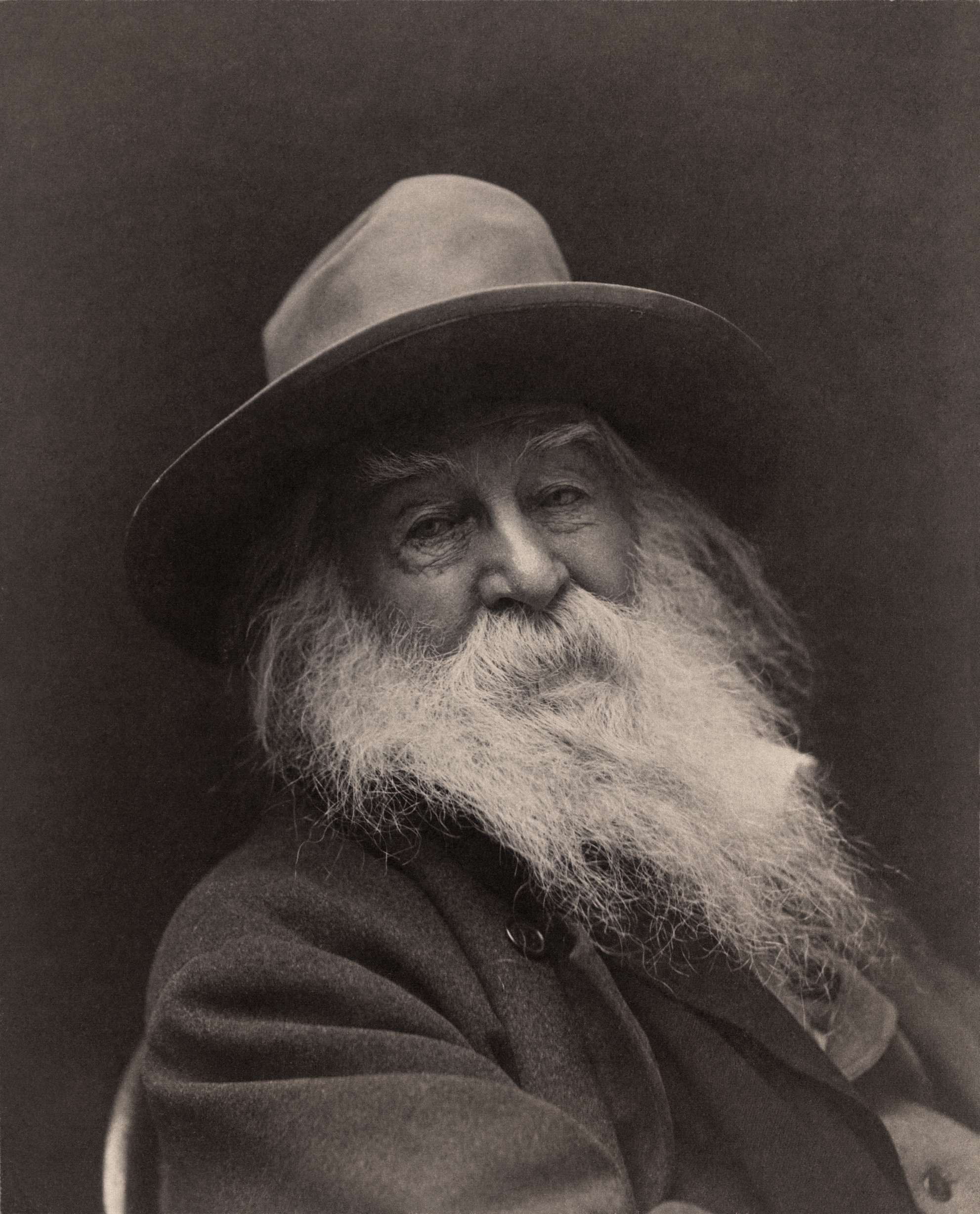
Portrait by George Collins Cox, restoration by Adam Cuerden. Public domain.
Walt Whitman was an American poet from Long Island who left school at eleven and worked as a printer, a schoolteacher and a newspaperman before he published anything. He spent the Civil War nursing wounded soldiers in the army hospitals in Washington. For the rest of his life he rewrote one book, Leaves of Grass, from 1855 until the year he died.
More from Walt Whitman
19 in all
More emotional poems
92 in all
More comforting poems
109 in all
Reading this poem at a funeral?
Create a farewell website for all the funeral details, RSVPs, flowers, donations and tributes in one place.
Free. No card needed.